The Fishin Frenzy demo is real — it is the picture around it that gets faked
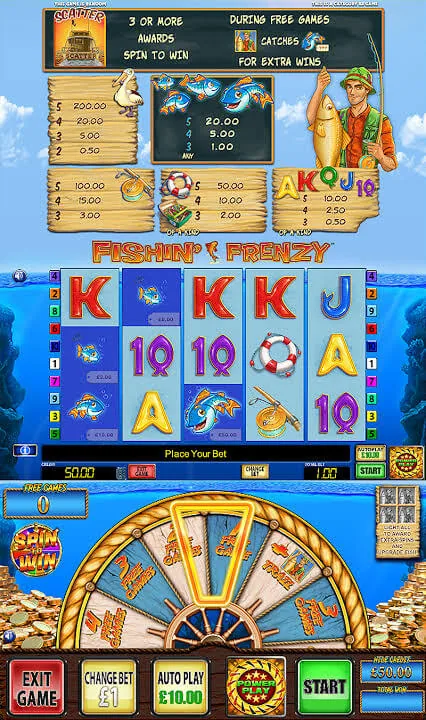
Start with the verdict, because most of the confusion around this game evaporates once you have it. A free Fishin Frenzy demo is a genuine and perfectly legal thing on the British market: the same reels, the same paytable and the same random number generator as the paid game, running on practice credits that cost you nothing. What it is not is a preview of how you will behave once the balance is your own money.
The myths grow where those two ideas get muddled. Players arrive expecting either a rigged showreel designed to tease them into a deposit, or a free training ground that secretly pays out. Neither survives a check. Below is what is true, what is half-true, where the demo runs, what a session actually feels like under the £5.00 ceiling, and the least risky way to move from practice credits to pounds.
The short verdict: a real game behind a partial window
A demo mode is a switch, not a separate product. The studio builds one game and the operator decides whether it runs with cash or with practice credits. That is why the symbols, the paytable and the spin logic are identical in both modes — there is no second, friendlier version of the machine hidden anywhere.
- True: the demo uses the same maths as the paid game, including the same losing runs.
- True: it is free in the literal sense — no deposit, no card details, no wagering attached to practice credits.
- True: it runs behind a UKGC-licensed operator, so the business is traceable in the UKGC public register.
- True: it is the cheapest way to learn the pace and the paytable before any money moves.
- Myth: that the demo is tuned to pay more often. It is not; every spin in both modes is independent.
- Myth: that a hot demo run predicts a good paid session. It carries no information at all.
- Myth: that free play is a loophole around the age rule. It is 18+ content, gated either way.
- Myth: that the demo is open to anyone who lands on the page. Plenty of UKGC operators unlock it only for signed-in, age-verified accounts.
Where the demo lives, and who gets to open the door
Three routes cover almost every case: the operator's own game page, the studio's site, and occasionally a web app from a licensed operator listed in the App Store or Google Play. The browser version is the one most British players meet first, and it needs nothing installed.
Registration is the part that catches people out. A demo needs no deposit and no bonus wagering, but on many UKGC-licensed sites free play is shown only to logged-in, age-verified accounts — the demo sits behind the account wall as a loyalty-adjacent extra rather than an open shop window. Where it is open to visitors, expect an age gate at 18 at the very least.
Whatever route you take, do one check before you play a single spin: scroll to the footer, find the licence number, and match it in the UKGC public register. The brands you see advertising this game are market examples, not endorsements, and none of them are vouched for here — the register is the only opinion that counts.
What a session feels like, and why the stake ladder is the honest bit
Load the demo and it behaves like the real cabinet: a stake selector, a spin button, optional autoplay, a paytable you can open and read. The pace is deliberately brisk — a spin resolves in a couple of seconds, and autoplay can rattle through a hundred of them without your hand on the button. That is the first genuinely useful thing a demo teaches, and also the first thing it teaches badly: fast repeated spins on free credits feel weightless, and the rhythm transfers even when the money does not.
Stakes are where myth meets regulation. A demo may offer a selector that runs higher than a British operator will ever allow, because you are looking at the studio's default build rather than the operator's UK configuration. With real money the ceiling is a hard £5.00 per spin, and £2.00 for players aged 18 to 24. Amounts in this market are written in pounds and pence — £10.00, never ten pounds — and that formatting is one of the easiest ways to spot a page that was not written for Britain.
Play long enough and the demo will show you a cold stretch, possibly a long one. That is not a malfunction; it is the shape of the game, and volatility simply describes how deep and how frequent those runs are. The demo is honest about this in a way no advertisement is.
Which numbers cross the line into cash, and which stay behind
Some of what you learn in demo transfers perfectly. Some of it is not even visible until money is involved. The split looks like this.
| Element | In the demo | With real money | |
|---|---|---|---|
| Reels, paytable, spin logic | Identical | Identical | → |
| Published return figure | Applies over the long run | Applies, and feels different | → |
| Stake ceiling | Studio default, sometimes higher | £5.00 a spin, £2.00 at 18–24 | → |
| Bonus wagering | Absent | Always present in some form | → |
| Identity and document checks | Invisible | Required before the first withdrawal | → |
| Deposit limits and affordability checks | Invisible | Limits on request; checks from £150.00 a month | → |
| Withdrawal timing | Not applicable | Slowest the first time, faster after | → |
The invisible column is where the demo quietly misleads. Age and identity checks are run before you can deposit, and documents are requested before your first withdrawal — 24 to 48 hours is normal for that review, and the first payout is always the slowest you will ever have. After that, e-wallets land in a few hours to a day, Faster Payments to a bank account runs from same day to two working days, and debit card refunds take one to three working days.
The lowest-risk way to turn practice into pounds
If the demo convinced you to try the paid version, the order in which you do things matters more than the stake you pick.
- Check the footer licence number against the UKGC public register before you register anything.
- Set a deposit limit before your first deposit, not after your first loss — operators are required to offer one.
- Pay with a method in your own name: debit card, PayPal, Apple Pay, Open Banking or paysafecard. Credit cards are banned for gambling in Britain, so do not expect one to work.
- Start at the smallest stake the game allows and keep sessions short; the £5.00 cap is a ceiling, not a target.
- Send your identity documents early so the first withdrawal is a wait rather than a shock.
- Read any bonus as a separate decision with its own wagering, and remember affordability checks begin from £150.00 of net deposits a month, using credit-reference data at the first stage.
Keep the exit visible while you do it. GAMSTOP blocks you from every UKGC-licensed site with one registration, for anything from six months to five years, and BeGambleAware is the place to go when it stops being a pastime. Winnings are tax-free for you — the operator carries the Remote Gaming Duty — but no tax rule has ever made a losing session cheaper.
FAQ
Is the Fishin Frenzy demo really free, or is there a catch?
Free in the sense that matters: no deposit, no card details, no wagering on practice credits. The catch is not a payment, it is perspective. Practice credits are not money, cannot be withdrawn, and will not tell you how a paid session feels when the balance is yours.
Do I need an account to play the demo in the UK?
Not always, but frequently. Many UKGC-licensed operators only open free play to signed-in, age-verified accounts, so you may have to register and clear an 18 check before the demo appears. Studio pages and some operator pages show it without registration.
Is the demo version set to pay more often?
No. The demo runs the same reels and the same random number generator as the paid game, with practice credits in place of cash. A generous demo run is luck and carries no information about the session you play next.
Can I win real money in demo mode?
No. Practice credits have no cash value and there is no withdrawal route. Whatever the counter shows is a simulated balance, useful for learning the paytable and nothing more.
Why does real play feel harder than the demo?
Because the numbers you notice change. The published return figure is the same in both modes, but a losing run in demo costs nothing while the same run costs your balance and your attention. Bonus wagering and document checks also appear only in the paid version.
What is the safest way to try it for real?
Check the footer licence against the UKGC register, set a deposit limit before your first deposit, pay with a debit card or e-wallet in your own name, start at the smallest stake, and send your documents early so the first withdrawal is not a surprise. Treat any bonus as a separate decision with its own wagering.