Why most Fishin Frenzy 'strategies' drain your wallet faster than the fish bite
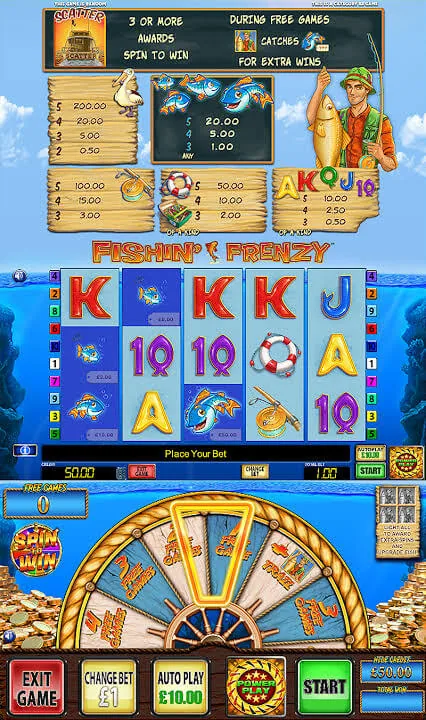
Let's start with the money. If you play Fishin Frenzy for 20 minutes at £5.00 per spin, you're committing £100 in stakes alone—before you've landed a single win. Most players who ask «how do I beat this game» have already lost that session before asking the question. The answer isn't a secret pattern; it's understanding what you can actually control, what the machine controls, and where the maths genuinely works against you.
The UK Gambling Commission regulates every licensed site serving British players. Your operator's UKGC licence number sits in the footer. That licence means stake caps, affordability checks, and real money protections—but it doesn't mean you'll win. This piece walks through the real costs, the myths that burn bankrolls, and how to run a session that doesn't punish you when variance turns cold.
The three things you'll lose money to (and why 'systems' don't fix it)
Fishin Frenzy, like every slot game, runs on a random number generator (RNG). That RNG isn't ignorant—it's indifferent. It doesn't care if you've lost five times. It doesn't accelerate wins because you 'deserve' them. It generates the next spin independently, every single time. This is why every betting 'system' you've heard—chase losses, double down after a dry streak, play at certain times—fails the same way: it tries to outsmart mathematics that has no memory.
Your money leaves through three channels. First: the house edge. Fishin Frenzy, like all regulated games, holds a built-in percentage of all stakes. Over a thousand spins, that edge compounds. Second: volatility. Even if you're playing a mathematically fair game, you'll hit stretches—sometimes long ones—where the reels don't align. That's not bad luck; that's the game's variance, and it's priced in. Third: your own decisions under pressure. When you're down £30, the temptation to stake £5.00 instead of £0.50, or to 'just one more spin' instead of stopping, costs real money.
- RNG means no spin is predicted by the previous one. Patterns you see are random clusters, not trends.
- House edge is set by the game provider. You can't negotiate it or exploit it.
- Volatility swings are normal. Dry spells lasting 30 spins are common; they don't signal a coming win.
- Chasing losses is the fastest way to burn a session budget. Once you're down, stop and leave.
What actually happens when you deposit and when you withdraw
You deposit £50 via debit card or Open Banking. Within seconds, the money appears in your account. You play. You might win £120 or lose the £50; either way, what you see in your balance is real. Then you ask to withdraw.
If it's your first withdrawal, your operator will ask for proof of identity and address—a utility bill, driving licence, passport scan. This is anti-money-laundering law, not a hurdle to annoy you. You'll wait 24–48 hours while they verify your documents against credit-reference data. After that, the cash moves. An e-wallet takes a few hours to a day; a Faster Payment to your bank account takes the same day to two working days. Debit cards take 1–3 working days. You don't control this speed. A site claiming 'instant' withdrawal is either misleading or illegal.
Here's the legal shift you need to know: since 2020, credit cards have been banned for gambling in the UK. Your payment method—debit card, PayPal, Apple Pay, Open Banking—must be in your own name. If it isn't, the operator will refuse it. This rule exists to stop people gambling with borrowed money or using cards that don't belong to them. It sounds obvious, but it blocks one major avenue of financial damage.
Stake caps and age brackets: the maths of how much you can lose in one session
The UK Gambling Commission sets stake limits by age. If you're 25 or over, the maximum is £5.00 per spin. If you're 18–24, it's capped at £2.00. These aren't suggestions; they're hard limits enforced by the operator's software.
What does this mean in real money? At £5.00 per spin, 20 spins cost £100 in stakes. 40 spins cost £200. If you play for an hour without hitting a win—which happens—you might stake £300 and have nothing to show. The cap exists precisely because this is predictable. Without it, a player chasing a win could stake £20, £50, or £100 per spin and burn through a week's wages in 10 minutes.
| Your age | Max stake per spin | 20 spins cost | 40 spins cost | 100 spins cost |
|---|---|---|---|---|
| 18–24 | £2.00 | £40.00 | £80.00 | £200.00 |
| 25+ | £5.00 | £100.00 | £200.00 | £500.00 |
The table isn't to scare you; it's to make the cost visible. If you decide to play for 30 minutes, you now know £150–£300 in stakes is plausible. That's the entry fee for the entertainment. Some will return as wins; most won't. Plan accordingly.
Volatility: why dry spells aren't anomalies, and what they cost
Fishin Frenzy is a medium-to-high volatility game. That means wins are often smaller but spaced further apart. You'll have stretches of 20, 30, sometimes 50 spins where the net result is flat or negative. This isn't a glitch. It's the design. High volatility games feel 'random' because they are, and the variance is intentional.
Here's where money leaks. A player sees a dry spell of 25 spins and thinks: «I'm due for a win. If I raise my stake to £3.00, the next big win will cover everything.» Nope. The RNG doesn't know you're frustrated. The dry spell might extend to 40 spins. At £3.00 per spin, you've now staked an extra £45 chasing a narrative that doesn't exist. The win, when it comes, doesn't 'make up for' those 40 spins; it just reduces the loss from catastrophic to painful.
- Play one session with a fixed stake (say, £1.00 per spin). Don't raise it mid-session.
- Set a 'stop after X spins' rule—30 or 50, your choice. When you hit it, walk away regardless of the balance.
- Accept that 15–20 dry spins in a row are statistically normal. They're not a sign you're close to a big win.
- If you lose your session budget, don't deposit again that day. Variance will still be there tomorrow.
Controlling the controllables: deposit limits, play time, and when to stop
You cannot control the outcome of any spin. You cannot beat the house edge. You cannot read the RNG. But you can control three things that matter.
First: your deposit limit. Every UKGC-licensed operator lets you set a maximum daily, weekly, or monthly deposit. Use it. Decide: «I'll deposit £100 this month and not a penny more.» Stick to it. The operator's system will enforce it. You can't override it without waiting for the cool-down period to expire.
Second: session length and stake size. Before you log in, decide: «I'm playing for 30 minutes at £1.00 per spin.» That's £30 in potential stakes—realistic, survivable. Set a timer. When it beeps, you stop. You don't get to negotiate with yourself. If the timer goes off and you're up £50, brilliant; cash out. If you're down £25, you've already lost; walking away doesn't cost anything extra.
Third: loss limit per session. Decide how much you'll lose before you stop. «If I'm down £40 out of my £50 budget, I stop.» When that line hits, you're done. This prevents chasing. This is the adult version of the dry spell rule.
The UKGC, affordability checks, and when you need to self-exclude
Every site you're seeing—the big brands, the smaller rooms—has a UKGC remote gambling licence. That licence number is in the footer. Look it up in the UKGC public register. It's not secret; it's proof the operator is legal and regulated.
What does regulation mean for you? The operator must be solvent (your money is segregated and protected if they collapse). They must be honest about the odds (RNG certification by a third-party lab). They must offer deposit limits and affordability checks. And if you're spending more than £150 monthly in net deposits, they must ask questions and potentially restrict you.
But regulation doesn't mean you're safe from your own decisions. If you feel gambling is becoming a problem—if you're depositing more than you plan, playing longer than you intend, or hiding it from family—you have one nuclear option: GAMSTOP. It's a national self-exclusion scheme. Register once, and every UKGC-licensed site blocks your account for 6 months to 5 years. You can't opt out early. It's irreversible until the period ends. BeGambleAware has free counselling and support. Use these tools before the problem costs you a month's wages.
- Check the operator's UKGC licence number in the footer. If it's not there or doesn't match the register, it's illegal.
- Affordability checks kick in if you net-deposit £150+ monthly. They're protective, not punitive.
- If you lose control, GAMSTOP is the nuclear button. Use it. It works.
- Gambling winnings are tax-free for you; the operator pays 40% Remote Gaming Duty to the government. You don't owe anything on a win.
FAQ
Is there a 'best time' to play Fishin Frenzy to increase my odds?
No. The RNG runs 24/7 and generates independent outcomes every spin. Playing at 2 a.m. or Tuesday afternoon makes no difference. The odds are identical. The only time that matters is how long you play; longer sessions mean more stakes and higher total loss expectation.
If I lose 10 spins in a row, am I more likely to win the next one?
No. Every spin is independent. The fact that the last 10 lost doesn't change the maths of the next spin. This is called the gambler's fallacy, and it costs thousands monthly. The dry streak has no 'payback' due. Expect 20+ dry spins per 100 as normal variance.
What's the difference between playing at £1.00 and £5.00 per spin?
At £1.00 per spin for 50 spins, you stake £50. At £5.00 per spin for 50 spins, you stake £250. The odds of winning any single spin don't change, but your total stake burned—and potential win size—scales with the bet. Lower stakes = lower cost to learn the game and enjoy it without financial pressure.
Why does my first withdrawal take 24–48 hours but deposits are instant?
Deposits are yours immediately; the operator isn't verifying anything yet. Withdrawals trigger anti-money-laundering checks. Your operator must confirm your identity and address using credit data before releasing funds. It's legal requirement, not incompetence. After the first withdrawal, subsequent ones move faster.